
Backyard Maple Sap Collection Checklist: Buckets, Lines, Filters, and Daily Routines
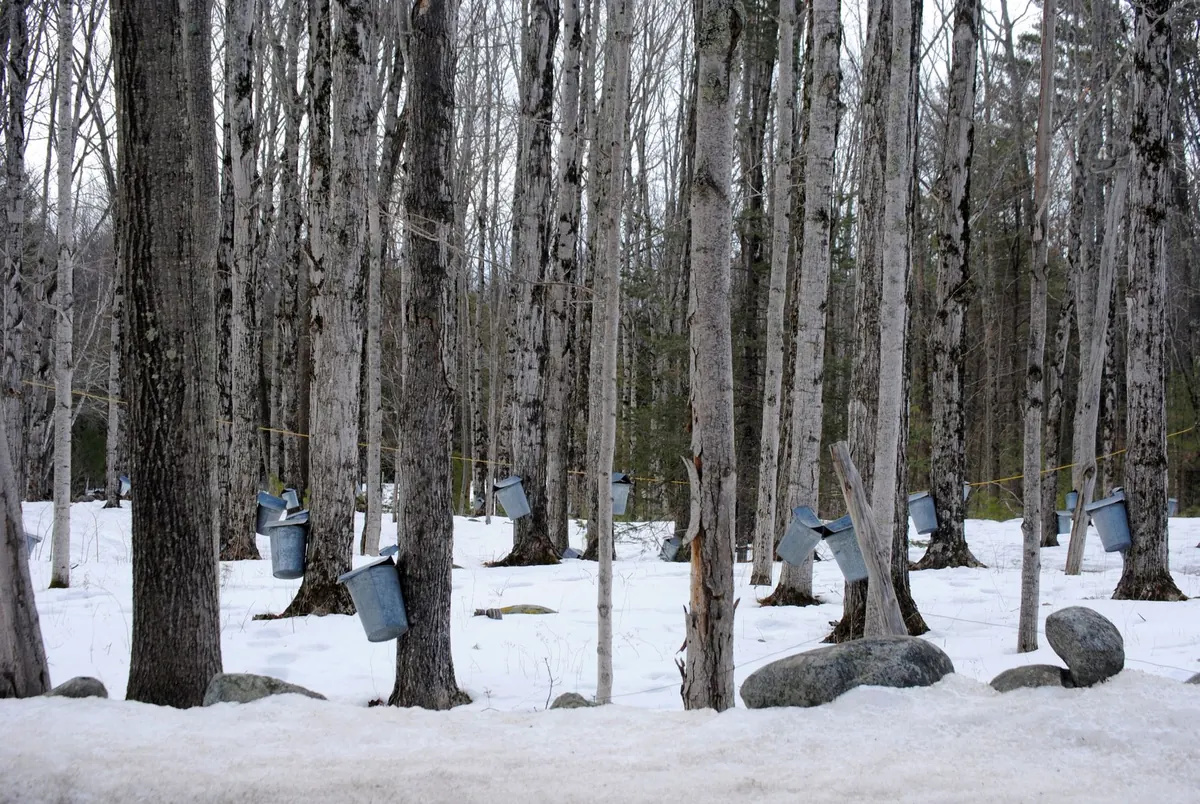
Maple season rarely arrives politely. You tap on a mild Saturday, then a stretch of freezing nights and warm afternoons hits, and suddenly every bucket is brimming, the shed smells like sweet steam, and you are hauling sap in the dark with a headlamp. A checklist won't make the sap sweeter, but it stops the small failures — a leaky spout, a lid blown off, a filter you can't find — from costing you a run. What follows is the version worth taping to the shed door.
Stage Your Gear Before the First Freeze-Thaw
Sap starts moving when nights drop below freezing and days climb into the forties, which means your first real run can land while you're still hunting for the drill bit. Get the kit together and test it early:
- Sharp 5/16-inch or 7/16-inch spouts with a matching drill bit — a dull bit tears bark and shortens the life of the tap
- Cordless drill with a spare battery, stored somewhere warm
- Tapping hammer or a light mallet, not a framing hammer
- Food-grade buckets with tight lids, or sap sacks and holders, plus a few spares
- Extra drop lines, tees, and a handful of line connectors
- Prefilters, a felt or synthetic filter, and a clean gathering pail
- Storage that keeps sap cold: drums, food-grade barrels, or a chest freezer running on "off" with jugs of ice
- Thermometer, sap hydrometer or refractometer, and a notebook for daily gallons
- Cart, sled, or tractor bucket for hauling, plus gloves that don't leak
Rinse everything that will touch sap with hot water and let it air dry. Skip scented soap, since residue carries into the finished syrup. Never use containers that held paint, oil, or anything not food-grade — plastic keeps odors, and sap picks them up fast.
Buckets and Bags: The Morning Inspection
Every bucket lid should seat firmly. A lid knocked loose means rain, leaves, and insects, and any of those will shorten the sap's life. Check the seal where the spout meets the bark too; a dripping spout sends sap down the trunk instead of into your pail.
Look at the sap itself, not just the level. Healthy sap is clear to slightly cloudy and thin as water. Sap that has turned ropey, dark, or sour-smelling should be dumped — it will ruin a batch far bigger than the one bucket it came from. During a heavy run, a five-gallon bucket can overflow in a day, and what spills over the rim is often the sweetest, most concentrated sap of the run. Empty before that happens.
Tubing and Lines: Slope, Tension, and the Walk-Through
Gravity lines do the work for you only if the slope is steady. A mainline wants a consistent fall of about two percent or better from the far tree to the collection tank. Sagging sections pool sap, and pooled sap sits warm and gets cloudy. Walk the line after the first hard freeze, since ice can lift fittings and pull connections apart.
Watch for kinked laterals, plugged drop lines, and squirrel chews, which show up as a fine spray or a wet stripe on the ground. If a section of tubing looks full and nothing is moving, you have a low spot or a blockage, not a slow day. Clear it before the next run rather than after.
Filters, Storage, and Keeping Sap Cold
Treat sap like fresh milk: it is a food product, and temperature decides how long it lasts. Aim to hold it below 40°F, and closer to freezing if you can. Snowbanks, shaded barrels, and frozen jugs dropped into a drum all work.
Filter twice. Run sap through a coarse prefilter as it goes into the gathering pail, then filter again before it enters the evaporator. The first pass takes out bark, insects, and grit; the second keeps sediment out of the pan, where it can scorch and flavor the whole batch.
Boil within a day or two of collection. The longer sap sits, the darker and stronger the syrup turns. On frozen mornings, scoop the ice chunks out of buckets and barrels before gathering — sugar stays in the liquid, so you are throwing away water, not sweetness. If you plan to sell anything you make, check your state or provincial food-safety requirements first, and confirm local rules before tapping roadside or public trees.
The Daily Routine That Keeps Sap Fresh
- Morning, ten to fifteen minutes: walk the bush, check lids and spouts, glance at lines, and note anything that needs fixing after work.
- Early afternoon: gather. Sap usually runs hardest in the warmest hours, roughly noon to late afternoon, so collecting then means you are moving the freshest sap.
- Evening: filter into cold storage, rinse the gathering pail, and log gallons in the notebook so you know when you have enough to fire the evaporator.
- Every second or third day: wash filters, tighten fittings, and check that stored sap still smells and tastes clean.
Small batches scorch and take forever, so boil when you have a decent volume rather than a gallon or two. A rough rule of thumb for backyard sap at around two percent sugar is forty gallons of sap per gallon of syrup; your trees will tell you their own numbers.
Reading the Weather and Knowing When to Quit
Freeze-thaw cycles drive the run. A hard freeze stalls it, and a week of mild nights with no frost usually signals the end. When buds swell and sap turns cloudy, thick, or oddly cabbage-like, the season is over — that is "buddy" sap, and it makes off-flavored syrup no matter how carefully you boil.
Pull your spouts when you stop collecting. Leaving them in does the tree no favors; tap holes close over best when they are cleaned up and left to heal while the wood is still cool and damp. Rinse spouts, store tubing off the ground, and scrub the evaporator before the residue sets like varnish.
Your Printable Checklist
Before the season: gear staged and rinsed, spares on hand, storage chilled, notebook ready. Every morning: lids, seals, sap color, line walk. Every afternoon: gather and haul. Every evening: filter, chill, log. Every few days: clean filters, fix leaks, boil.
Print that, tape it inside the shed door, and add your own lines as the seasons teach you what your trees and your schedule actually demand. The best sugaring routine is the one you will still follow on a Tuesday night in March when the sap is running and dinner is late.
Photo: Matt Barnard / Pexels